NBA Overtime Rules and How They Affect Your Bets
 Available in US
I lost my first NBA bet because of overtime and I did not even know it. I had taken the under on a game total of 215.5. After four quarters the combined score sat at 213 — a comfortable winner. Then the game went to overtime, both teams scored another 18 points between them, and the total landed at 231. My “winning” bet was suddenly a loss. That experience taught me a lesson I have never forgotten: if you do not understand how overtime interacts with your bet type, you are not fully in control of what you have wagered on. The estimated NBA betting handle in the US alone sits around 28 to 30 billion dollars annually, and a meaningful slice of the disputes between punters and bookmakers come down to overtime settlement rules that the bettor never checked.
Use overtime trends in NBA live betting when games head to extra time.
NBA Overtime: How It Works on the Court
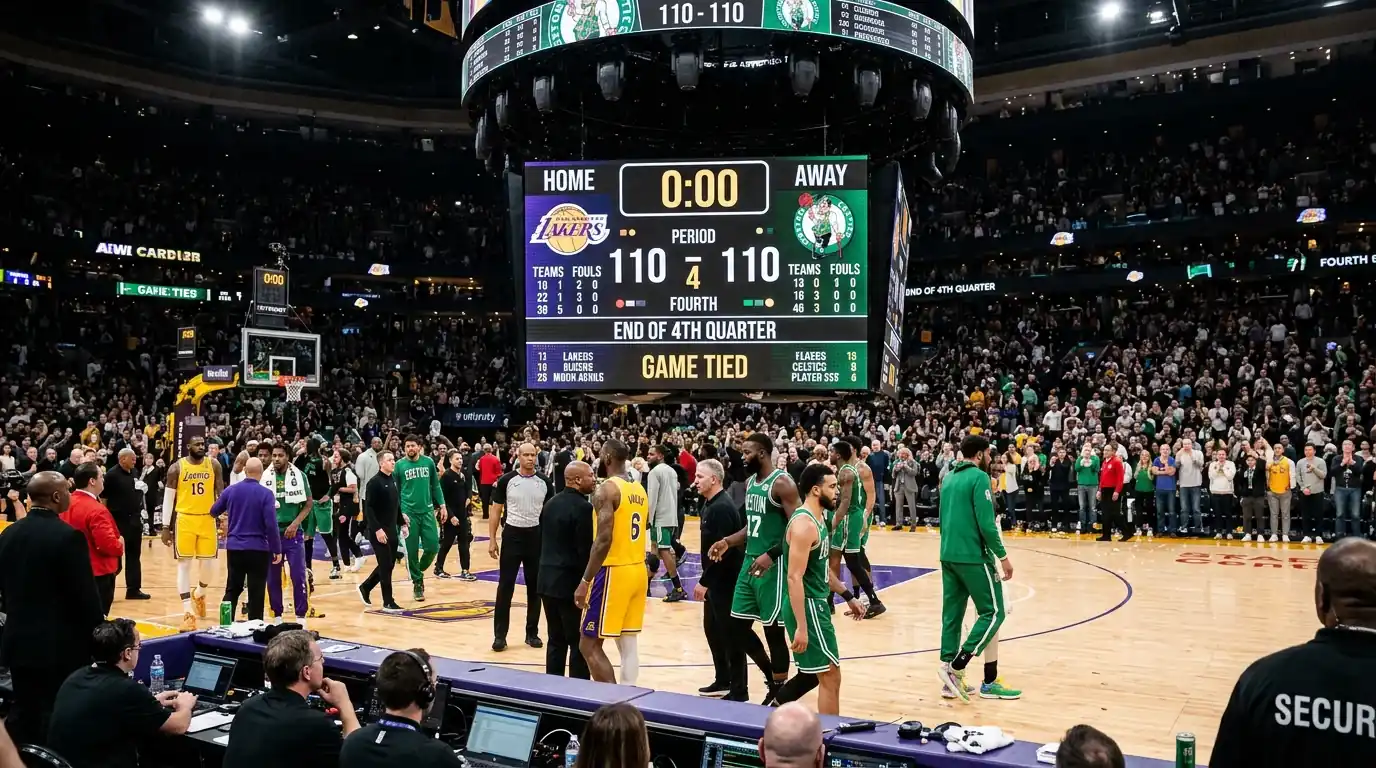
When an NBA game is tied after the fourth quarter, the teams play a five-minute overtime period. If the score is still level after that, they play another overtime. And another, if necessary. There is no cap on the number of overtime periods — the game continues until one team leads at the end of a period. The longest NBA game in history featured six overtimes.
Each overtime period is five minutes, compared to twelve minutes for a regulation quarter. The shorter duration means fewer total possessions, but the intensity is higher: fouls accumulate, bench players rotate in as starters pick up foul trouble, and the pressure of elimination-style play changes shot selection and pace. Those dynamics matter for betting because overtime scoring is not proportional to regulation scoring — it tends to produce fewer points per minute than regular quarters due to increased fouling and free-throw-heavy possessions.
For UK punters, the key takeaway is simple: overtime exists, it is not rare, and it changes the outcome of bets in ways that are invisible until you check the settlement rules.
Which Bet Types Include Overtime?
This is the section I wish someone had written for me before that under-215.5 disaster. The rules vary by bet type, and getting them wrong means misunderstanding what you have actually bet on.
Moneyline bets always include overtime. Your team must win the game, however long it takes. Since NBA games cannot end in a draw, this is straightforward: back the winner, collect the profit. Overtime does not change the settlement — it just extends the time your bet needs to survive.
Point spread bets also include overtime at virtually every UK bookmaker. If you have taken a team at +4.5 and the game goes to overtime, the final margin including OT is what matters. This can work for or against you. A team trailing by 6 at the end of regulation might claw back to lose by only 2 in overtime, covering your spread. Alternatively, a team that covered the spread at the end of regulation might give up points in OT and fail to cover.
Game totals — over/under on the combined score — include overtime. This is where most confusion and frustration occurs. An under bet that looked safe after four quarters can be destroyed by five extra minutes of play. Live in-play betting demonstrates the fastest adoption growth in the industry, climbing roughly 12% in user adoption each year, and a significant portion of late-game live totals bets are placed by punters who do not account for the overtime possibility.
Player props are more nuanced. At most UK bookmakers, standard player props (points scored, rebounds, assists) include overtime statistics. If a player has 22 points after regulation and you bet over 24.5, that bet is still alive in overtime. However, some bookmakers offer “regulation time only” props as a separate market. Always check the specific settlement rules in your bookmaker’s terms for player props — the default varies.
Quarter and half bets are the clearest exception. First-quarter, second-quarter, first-half and second-half bets settle on the score at the end of that specific period. Overtime does not affect them because overtime is a distinct, additional period. If you want to avoid overtime exposure entirely, period-specific bets are the natural choice — and I cover those in more detail in my NBA over/under betting guide.
How Often Do NBA Games Go to Overtime?
I tracked overtime frequency across three full seasons out of curiosity, and the number is remarkably stable: roughly 6% to 7% of regular-season games go to at least one overtime period. That translates to approximately 75 to 90 games per season out of 1,230 total.
That might sound like a small percentage, and on any individual bet it is. But if you place 200 NBA bets across a season, the probability of at least some of those being affected by overtime is substantial. Over the course of a full season, overtime is not a fringe event — it is a recurring feature of the schedule.
Overtime frequency rises in the playoffs, where games are tighter and the stakes higher. The increased intensity and closer talent gap between playoff teams pushes more games to tied scores at the end of regulation. If you bet heavily on the postseason, overtime awareness becomes even more important.
Double overtime (two extra periods) occurs in roughly 0.5% of games — rare but not negligible. Triple overtime and beyond is genuinely uncommon, happening a handful of times per decade. For practical betting purposes, planning for the possibility of a single overtime is sufficient.
Explore nba betting ods for all NBA game rules and markets.
Factoring Overtime Into Your NBA Betting
Knowing the rules is one thing. Using them is another. Here is how overtime probability feeds into my own betting process.
For totals bets, I look at the closing spread. Games with spreads of 1 to 3 points have a significantly higher overtime probability than games with spreads of 7 or more. When I am betting the under on a game with a tight spread, I build in a mental buffer: if the total needs to be close to the line for the under to hit, the overtime risk makes the bet less attractive than the raw numbers suggest. In those spots, I either pass on the bet or look at first-half totals instead, where overtime is not a factor.
For spread bets, overtime adds variance in a way that is hard to predict. A team covering by 3 at the end of regulation might lose the overtime period and fail to cover. The practical implication is that I treat spread bets on very close games with extra caution, because the outcome depends on what happens in an unpredictable additional period rather than the broader flow of four regulation quarters.
For player props, overtime is generally a benefit to the over bettor. Extra minutes mean extra counting stats. If you are deciding between an over and an under on a player prop in a game projected to be tight, the overtime tail risk favours the over — not dramatically, but enough to be worth noting in a marginal decision.
The Five-Minute Variable You Cannot Ignore
Overtime is not a rare edge case that you can safely ignore. It is a structural feature of the NBA that affects roughly 1 in 15 regular-season games and interacts differently with every bet type you can place. The five minutes it took you to read this article might save you from the same overtime-induced loss I experienced years ago — and the ten seconds it takes to check your bookmaker’s settlement rules before placing a bet will prevent it from happening again.
Does a push on the spread change if the game goes to overtime?
If the spread is a whole number (for example, +4.0) and the final margin including overtime equals exactly that number, the bet is a push and your stake is returned. Overtime does not change this rule — the push threshold is based on the final margin regardless of whether the game went to extra periods. Most NBA spreads use half-points to avoid pushes entirely.
Are NBA player props settled after regulation or including OT?
At most UK bookmakers, standard player props (points, rebounds, assists) are settled on the final statistics including overtime. However, some operators offer separate regulation-time-only prop markets. Always check your specific bookmaker’s settlement rules before placing a player prop bet, as the default can vary between operators.
Created by the ”nba Betting ods” editorial team.