NBA Over/Under Betting: How Totals Lines Work
 Available in US

The bet that first made me feel like I understood basketball at a deeper level was not a moneyline or a spread — it was a totals wager. I had been watching a Pacers game, noticed how absurdly fast both teams pushed the ball, and thought, “There is no way this game stays under 230.” It did not. And from that moment, I started seeing NBA games differently — not as “who wins” but as “how will this game play out.” The NBA generates roughly 60% of all basketball betting revenue worldwide, and totals markets are one of the most active corners of that economy.
How NBA Totals Lines Are Set
Before a game, bookmakers set a number representing the expected combined score of both teams. Your job is to decide whether the actual combined score will go over or under that number. That is the entire bet.
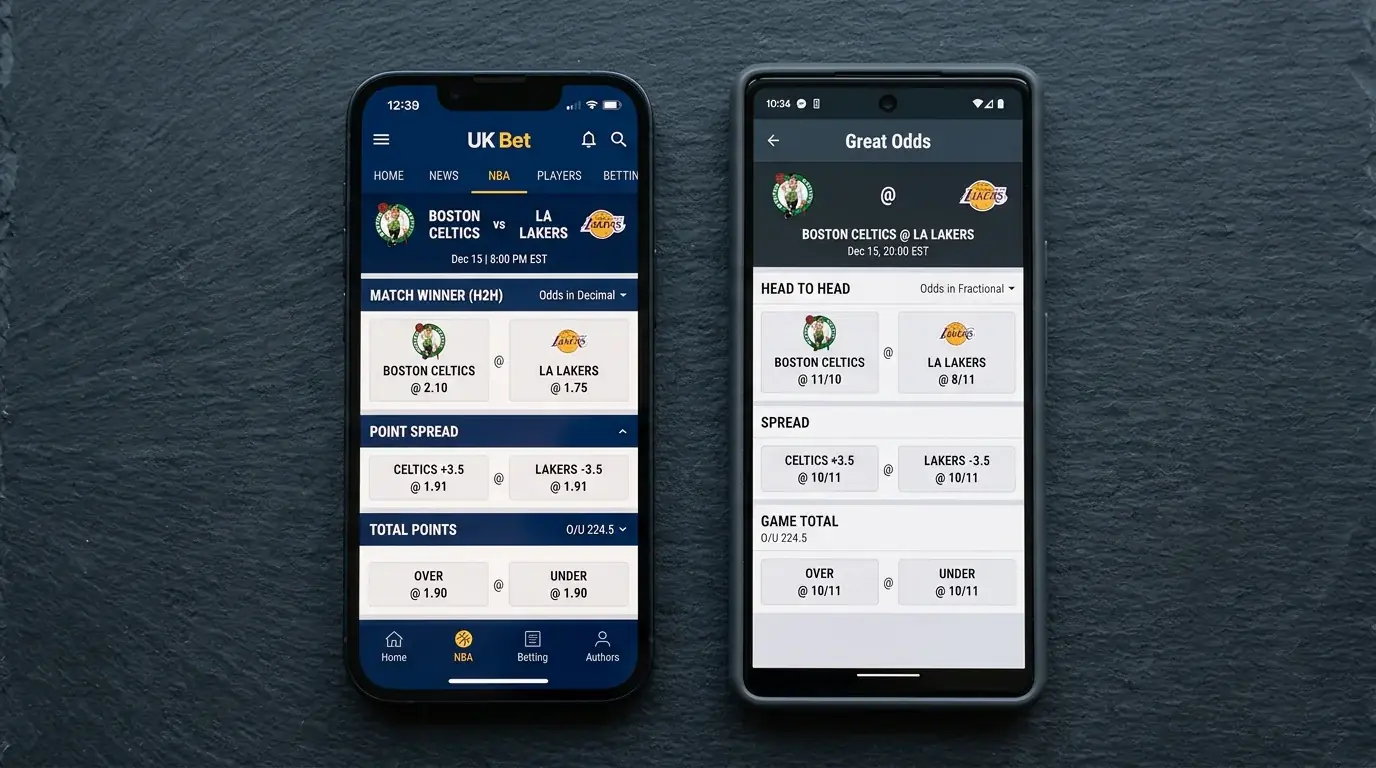
If the line is set at 224.5 and the final score is 115-112 (combined 227), the over wins. If the final score is 108-104 (combined 212), the under wins. The half-point ensures there is no push — one side always wins.
The line is derived from statistical models that factor in each team’s offensive and defensive efficiency, pace of play, recent form, and venue. Bookmakers then adjust based on where the money lands. A flood of bets on the over can push the line from 224.5 to 226.5, even if the underlying data has not changed. Understanding this distinction — model-driven movement versus money-driven movement — is fundamental to finding value in totals markets.
UK bookmakers price both sides of a totals bet close to even money, typically at 10/11 each. That near-symmetry means you are not paying a steep premium for either side, which makes totals one of the more bettor-friendly markets in NBA.
Check how NBA overtime rules can affect your over/under selections.
What Pushes NBA Games Over or Under
I keep a checklist of five factors I review before placing any totals bet. They are not secret or proprietary — most experienced bettors use some version of the same list — but applying them consistently is what separates an informed wager from a guess.
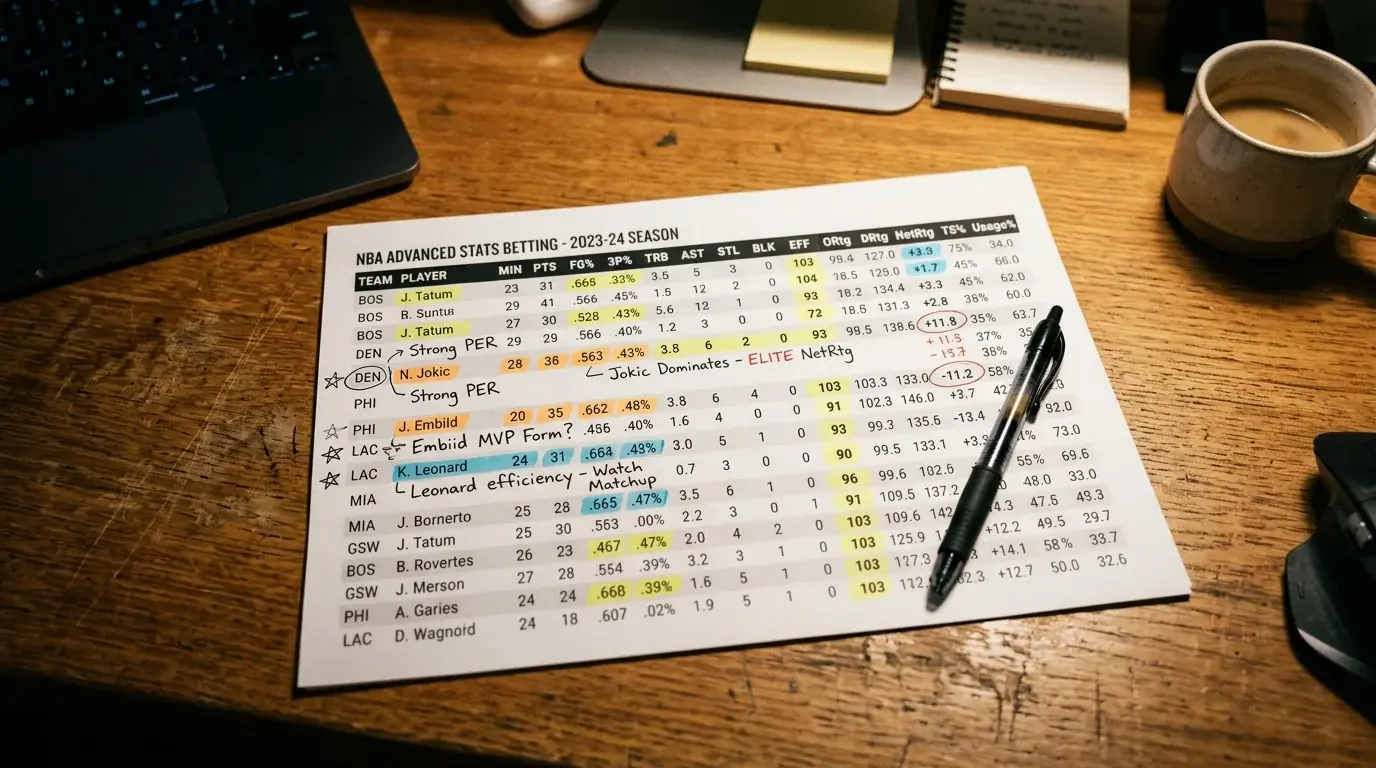
Pace is the dominant factor. The NBA measures pace as possessions per 48 minutes. A game between two top-five pace teams creates more shot attempts, more transition opportunities, and more points. A game between two bottom-five pace teams grinds. The difference can be 15 to 20 combined possessions per game, which at average efficiency translates to roughly 15 to 20 points of expected scoring variance. Basketball is forecast to have the fastest-growing betting compound annual growth rate among US sports through 2030, and pace-based analysis is a major reason why sharp money flows into totals markets.
Defensive efficiency is the second factor, and it acts as a counterweight to pace. A fast team that plays poor defence might push games over, but a fast team with elite defence might keep the combined score lower than you expect because they generate turnovers and easy transition baskets that inflate their own total while suppressing their opponent’s. You need to evaluate both sides of the ball for both teams, not just look at a single metric.
Rest and fatigue tilt games in a predictable direction. Teams on the second night of a back-to-back tend to score fewer points and defend less intensely, which can push totals in either direction depending on the opponent. I have found that the most reliable pattern is a tired team facing a rested, fast-paced opponent: the rested side scores freely while the fatigued side cannot keep up defensively, driving the total over.
Injuries to high-usage players affect totals more than most bettors realise. When a team’s primary scorer sits out, the replacement rarely matches the same output. The team’s offensive efficiency drops, and the total line might not fully adjust because the bookmaker waits for market confirmation rather than moving immediately. That gap is where value appears, particularly on the under.
Home versus away context matters, but less than in other sports. NBA home teams do score slightly more on average, but the effect on totals is marginal — maybe a point or two of combined expected scoring. It is the least important factor on my checklist, which is why I mention it last.
Pace, Tempo and Their Effect on Totals
BetIdeas’ editorial team once noted that selling the spread on big-name teams like the LA Lakers when the market gets overly enthusiastic frequently pays off. The same logic applies to totals: public perception of exciting, high-scoring teams drives money toward the over, sometimes pushing the line past the point where the over retains value. When that happens, the under becomes the contrarian play with the better maths.
Let me give you a worked example. Two teams with a combined average pace of 102 possessions per game and average offensive ratings of 112 points per 100 possessions would be expected to combine for roughly 228 points. If the public’s excitement about a star-studded matchup has pushed the line to 233.5, the under holds value — not because the game will be low-scoring, but because the market has overshot the statistical expectation.
Tempo shifts within a game also matter for live totals betting. NBA games frequently change character between halves: a frenetic first half with 130 combined points can give way to a grinding third quarter as coaches tighten rotations. If you are betting totals in-play, tracking the pace of the current quarter rather than extrapolating from the first half will serve you far better.
Team Totals vs Game Totals
Most punters default to game totals — the combined score of both teams. But UK bookmakers increasingly offer team totals, where you bet on whether a single team will score over or under a specified number. This market lets you isolate one side of the equation.
I find team totals particularly useful in lopsided matchups. If a heavy favourite is expected to win 118-102, the game total might sit around 220. Betting the over on the favourite’s team total of 117.5 feels more grounded than betting the game total over, because you only need one team to perform — and you are betting on the team more likely to deliver. Conversely, betting the under on a bad team’s team total in a game where they face an elite defence is a cleaner expression of a specific thesis.
The odds on team totals are structured identically to game totals — both sides priced near 10/11. The line just narrows to a single team’s output, which means your analysis can be more focused. If you have a strong view on one team’s likely scoring but are uncertain about the opponent, team totals let you act on that view without taking unnecessary exposure. For more on how back-to-back scheduling can tilt these lines, see my analysis of NBA back-to-back games and their betting impact.
See also: nba betting ods for all NBA totals markets.
Reading the Total as a Signal, Not Just a Bet
Even when I am not betting on totals, I check the line. It tells me something about how the bookmaker expects the game to flow, and that information feeds into my analysis of other markets. A total set at 208 signals a slow, defensive game. A total at 238 signals a track meet. Those expectations affect how I evaluate spreads, props and even moneylines, because the style of game influences which team is more likely to thrive. Totals are not just a market — they are a lens through which the entire game becomes clearer.
How do bookmakers settle an NBA totals bet that goes to overtime?
Standard game totals include overtime scoring. If the line is 224.5 and the game finishes 115-114 after overtime for a combined 229, the over wins. Some bookmakers offer regulation-time-only totals as a separate market, but the default totals line always includes any overtime periods. Check your bookmaker’s settlement rules to confirm.
What is the average total line for an NBA game?
During the 2025-26 season, average NBA totals lines have sat in the 220 to 228 range for most matchups, though individual games can fall well outside that band. High-pace matchups between fast offensive teams might see lines above 235, while games featuring elite defences or slow-tempo teams can drop below 210. The line reflects the specific matchup, not a league-wide average.
Prepared by the nba Betting ods editorial staff.