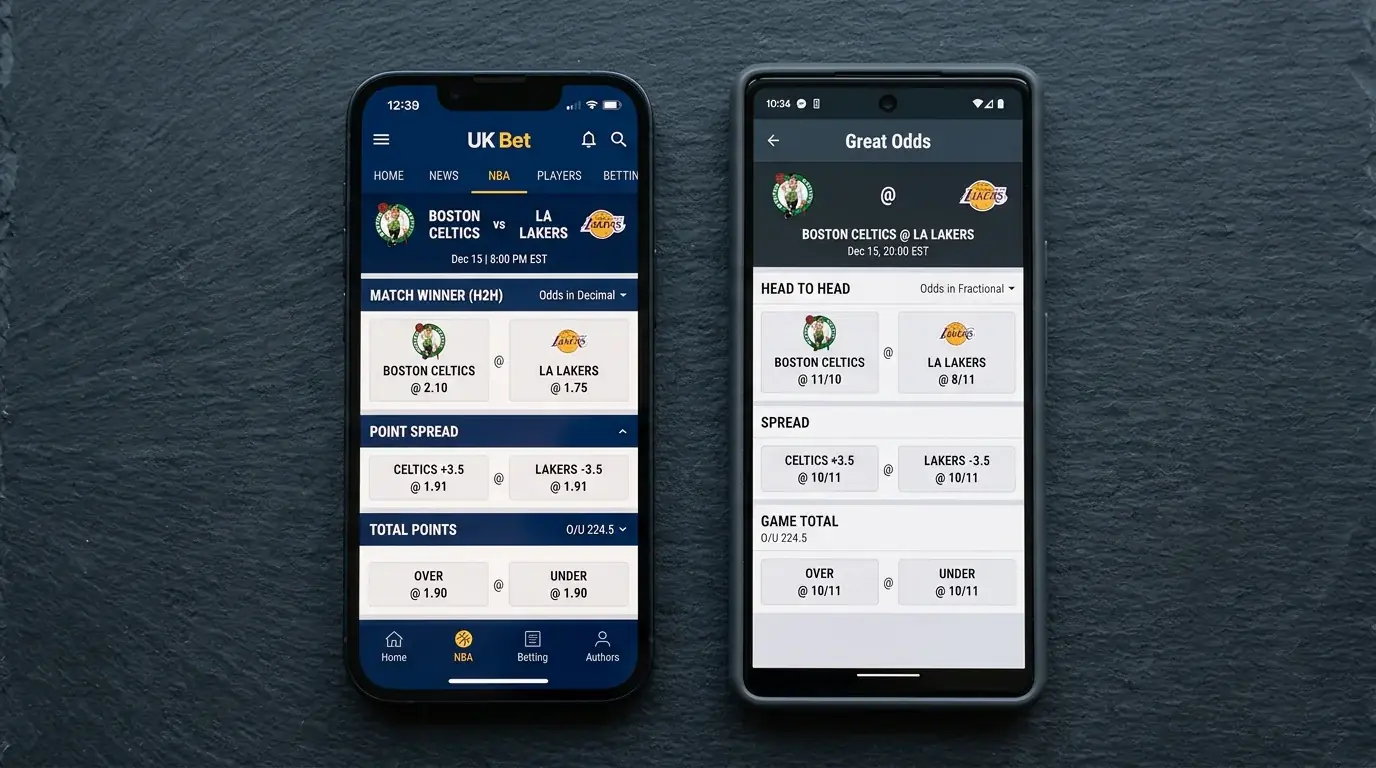
NBA All-Star Game Betting: Markets and What to Expect
 Available in US
I backed the under on the NBA All-Star Game total once. The line was set at 320.5, which sounded absurdly high for any basketball game. The final combined score was 374. That evening taught me a lesson I share with anyone who asks about All-Star betting: this is not a normal NBA game, and the numbers from a normal NBA game have absolutely no relevance here. Basketball has climbed to 13th in overall sports engagement in the UK and sits as the 6th most popular sport among 18-to-24-year-olds, which means more UK punters are exposed to the All-Star spectacle every year — and more of them are tempted to bet on it without understanding how fundamentally different the event is.
Understand the odds formats with our NBA moneyline betting guide.
What NBA All-Star Markets UK Bookmakers Offer
UK bookmakers have expanded their All-Star coverage significantly in recent years, driven by growing NBA viewership and the event’s social media profile. Among adult Gen Z in the US, 40% have a favourite NBA player — the highest rate for any sport — and the All-Star Game is built around those individual stars, making it a natural magnet for casual and fan-driven wagering.
The main markets include the game winner (which team or side takes the exhibition), the game total (over/under on combined points), player points props, MVP award winner, and various specials tied to the Slam Dunk Contest and Three-Point Shootout. Some bookmakers also offer quarter-specific markets and first-scorer bets, though these tend to be available only from operators with deep basketball coverage.
Liquidity on All-Star markets is lower than on a regular playoff game but higher than a mid-season fixture, because the event’s profile attracts both recreational bettors and a handful of specialists who focus specifically on exhibition dynamics. The odds are posted earlier than for regular games — sometimes a week before the event — giving you time to assess the market before committing.
Why All-Star Totals Are Nothing Like Regular Season
The defining feature of the All-Star Game is defensive effort — or the almost complete absence of it. Players are there to entertain, not to grind out stops. Transition baskets, uncontested dunks, and pull-up threes from the logo are the norm. The pace is dramatically faster than any regular-season game, with possessions lasting 8 to 10 seconds instead of the usual 14 to 16.
This means the total line for the All-Star Game sits 80 to 100 points higher than a typical NBA game. Where a regular game might have a total of 224.5, the All-Star total opens around 310 to 340, depending on the year’s format and expected level of competitive intensity. Betting the under at 320 feels wrong because the number is so far above anything you have seen in a real game, but the truth is that All-Star totals regularly exceed 350 when neither side plays defence.
The format drives the total as much as the effort level. In recent years, the NBA has experimented with different formats — a target score in the fourth quarter, a mini-tournament structure, and traditional game format. Each format produces a different scoring distribution. A target-score format tends to compress the total because the game ends once the target is hit, while a traditional format allows scoring to run unchecked through all four quarters. Before betting any All-Star total, confirm which format is in effect for that year, because the same line can be drastically over or under depending on the rules.
Format Changes and Their Betting Implications
The NBA has changed the All-Star Game format repeatedly in search of something that produces genuine competition. The Elam Ending — a target-score format introduced in 2020 where the first team to reach a specified total in the fourth quarter wins — was praised for adding late-game drama but criticised for reducing overall scoring. More recent experiments have included multi-team mini-tournaments and traditional East vs West matchups with modified rules.
Each format shift invalidates historical data. If the NBA switches from a target-score format to a traditional game for the upcoming All-Star break, the previous year’s total has limited relevance to line-setting for the new format. Bookmakers account for this, but the adjustment is imprecise because the sample size of each format is tiny — sometimes just one or two games. That imprecision is where the sharpest All-Star bettors look for edges.
My approach is to focus on the incentive structure rather than the format details. If the format rewards winning (a cash prize, a charity donation, or simply competitive pride through a tournament bracket), defensive effort increases and totals trend lower. If the format is purely exhibition with no meaningful stakes, defence disappears and totals trend higher. The incentive signal is more predictive than historical scoring averages from different formats.
Slam Dunk Contest and Three-Point Shootout Props
All-Star Weekend extends beyond the main game, and UK bookmakers now cover the Saturday night events — the Slam Dunk Contest and Three-Point Shootout — with individual winner markets and selected props.
The Dunk Contest is essentially a coin flip wrapped in spectacular athleticism. Judging is subjective, outcomes are heavily influenced by crowd reaction, and the field is usually 4 to 6 participants. Betting on the winner is closer to entertainment gambling than to analytical wagering. If you enjoy it, keep stakes minimal and treat it as a fun bet rather than a serious position.
The Three-Point Shootout is slightly more predictable because it is a pure skill competition with an objective scoring system. Historical three-point percentages and shooting mechanics provide some analytical foundation. Players who shoot a high volume of catch-and-shoot threes during the season tend to perform well in the Shootout’s rhythm-based format, while players who create their own shot off the dribble sometimes struggle with the fixed rack-to-rack structure. For a deeper look at how scoring patterns influence over/under markets in a real-game context, see my guide to NBA totals betting.
Explore nba betting ods for NBA special event markets.
The Exhibition Bet That Requires Exhibition Thinking
All-Star Game betting is not a serious analytical exercise in the way that regular-season and playoff betting can be. It is a spectacle, and the betting markets reflect that. My advice is the same I would give to anyone betting on an awards show or a celebrity charity match: bet small, bet for fun, and do not apply the frameworks that work for real games. The All-Star break is a week off from serious wagering — enjoy it as one.
Do UK bookmakers offer odds on the NBA Slam Dunk Contest?
Most major UK bookmakers offer a winner market for the Slam Dunk Contest as part of their All-Star Weekend coverage. Some also offer head-to-head matchups between individual dunkers and props on specific elements of the contest. Market depth varies by operator, so check multiple sites for the widest selection.
Is it worth betting on the NBA All-Star Game?
As a serious profit-seeking exercise, no. The All-Star Game is an exhibition with unpredictable defensive effort, frequent format changes, and limited analytical data to work from. As a fun, small-stakes complement to watching the event, it can add entertainment value — just keep stakes proportional to the lack of edge.
Written by the editors at nba Betting ods.