NBA Betting Bankroll Management: Sizing Stakes and Staying Solvent
 Available in US

The NBA season that taught me the most about betting was the one where I lost money. Not because the picks were terrible — my win rate hovered around 54% — but because I had no staking discipline whatsoever. Some nights I would put 20 pounds on a moneyline. Other nights, riding a hot streak, I would throw 100 pounds at a same game parlay. By March I was down despite winning more bets than I lost. That is the maths of bankroll mismanagement in action, and roughly 47% of UK adults gamble in some form each year, most of them without a staking plan that would survive a bad week.
This article is about the boring part of betting — the part that actually determines whether you end a season in profit. If you are looking for tips on which team to back tonight, you are in the wrong place. If you want to stop bleeding money on nights when your picks are fine, keep reading.
Bet responsibly with our NBA responsible gambling UK guidelines.
Why Bankroll Management Matters More in NBA
I hear this objection constantly: “I manage my money fine — I only bet what I can afford to lose.” That is a responsible attitude to gambling in general, but it is not bankroll management. Bankroll management is a system that dictates how much you stake on each individual bet relative to a defined pool of funds, and it matters more in NBA than in most sports for one structural reason: volume.
An NFL bettor places maybe 16 to 20 bets per week during the season. An NBA bettor can easily place that many in a single night. The regular season runs 82 games per team, with up to 15 games on some evenings. That density creates more opportunity, but also more exposure. Without a system, the sheer number of available bets pulls you into over-staking on certain nights and under-staking on others, creating variance that has nothing to do with your edge.
There is a psychological dimension too. 95% of online gambling in the UK happens from home — late at night, on a phone, often alone. That environment lowers the friction between impulse and action. A staking system provides artificial friction: before you type a stake amount, you check it against your rules. That pause is worth more than any single pick.
Flat Stakes vs Percentage Staking: Pros and Cons
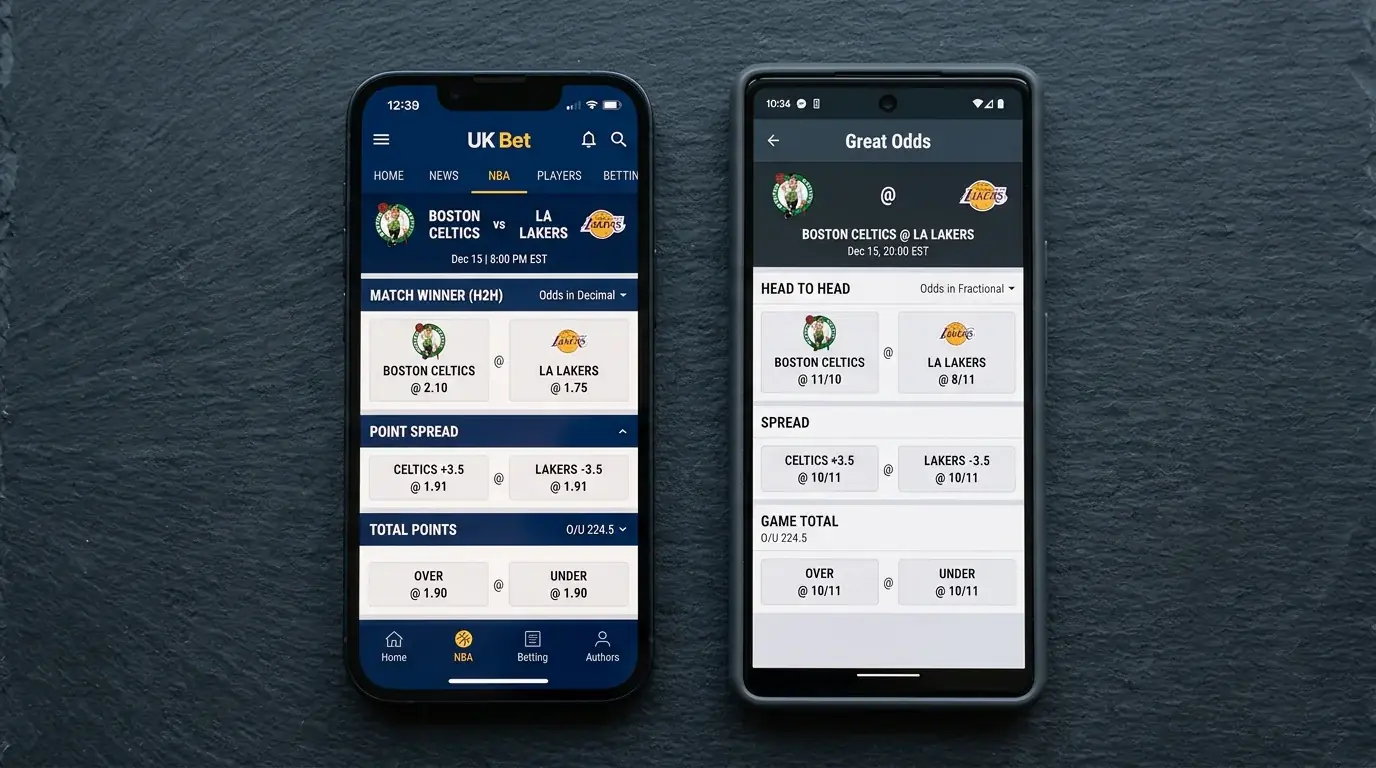
Two models dominate, and I have used both extensively. Flat staking means you bet the same fixed amount on every selection regardless of confidence, odds or market. If your unit is 10 pounds, every bet is 10 pounds — the moneyline favourite at 4/9 and the underdog player prop at 5/1 get the same stake.
The advantage is simplicity. You never have to calculate anything. You never talk yourself into doubling up on a “strong” pick. The disadvantage is rigidity: your stake does not adjust as your bankroll grows or shrinks, so a losing streak represents a larger and larger percentage of your remaining funds.
Percentage staking fixes that problem. Instead of a fixed amount, you bet a fixed percentage of your current bankroll — typically between 1% and 3%. If your bankroll is 500 pounds and your percentage is 2%, your first bet is 10 pounds. If you lose five bets in a row and your bankroll drops to 450 pounds, your next bet is 9 pounds. The stake automatically shrinks during cold streaks and grows during hot ones, making it much harder to bust out entirely.
The disadvantage of percentage staking is that recovery from a drawdown is slower, because your stakes shrink as you lose. Some punters find this frustrating — you need to win proportionally more bets to climb back to your starting point compared to flat staking. In practice, though, that slower recovery is the feature, not the bug: it keeps you in the game long enough for a genuine edge to assert itself over variance.
My recommendation for anyone betting on NBA from the UK: start with flat staking at 1-2% of your bankroll. Once you have a few months of data on your own performance, consider shifting to percentage staking if you want more sophisticated risk control.
Defining Your Unit Size
Your “unit” is the standard amount you bet. It is the base measurement that makes your results comparable over time. Telling someone “I won 3 units last week” communicates more useful information than “I won 47 pounds” because it is normalised to your bankroll size.
To set your unit, first define your bankroll. This is money you have specifically allocated for NBA betting — not rent money, not savings, not the balance in your current account. It is a separate, ring-fenced amount that you can afford to lose entirely without affecting your life. If that amount is zero, you should not be betting.
A common starting point is 1% of bankroll per unit. A 500-pound bankroll means a 5-pound unit. That gives you 100 units of runway, which is enough to absorb a 15-bet losing streak — something that happens more often than new bettors expect — without wiping you out. Some experienced bettors push to 2% or even 3%, but anything above 5% per unit is reckless regardless of how confident you feel about your picks.
Recalculate your unit monthly or at natural breakpoints (All-Star break, start of playoffs). If your bankroll has grown from 500 to 650 pounds, your new unit at 1% is 6.50. If it has dropped to 400, your new unit is 4. This recalibration keeps your risk proportional to your current position, not to where you started.
Emotional Discipline Across an 82-Game Season
NBA Commissioner Adam Silver once acknowledged that the league was still learning as it went when it came to the relationship between basketball and betting. Punters are in the same position — we are all learning how to manage the emotional weight of a season that never stops. The sheer length of the NBA calendar, from October to June, means your staking discipline will be tested by every imaginable scenario: five-game losing streaks, euphoric winning runs, late-season meaningless games where teams rest starters, and playoff intensity that makes you want to bet your entire bankroll on a Game 7.
The two emotions that destroy bankrolls are tilt and overconfidence. Tilt — betting recklessly after a loss — is the more famous threat, but overconfidence after a winning week is equally dangerous. When everything you touch turns to profit, the temptation to increase your unit size or add extra bets is almost irresistible. Do not do it. Your staking rules exist precisely for these moments.
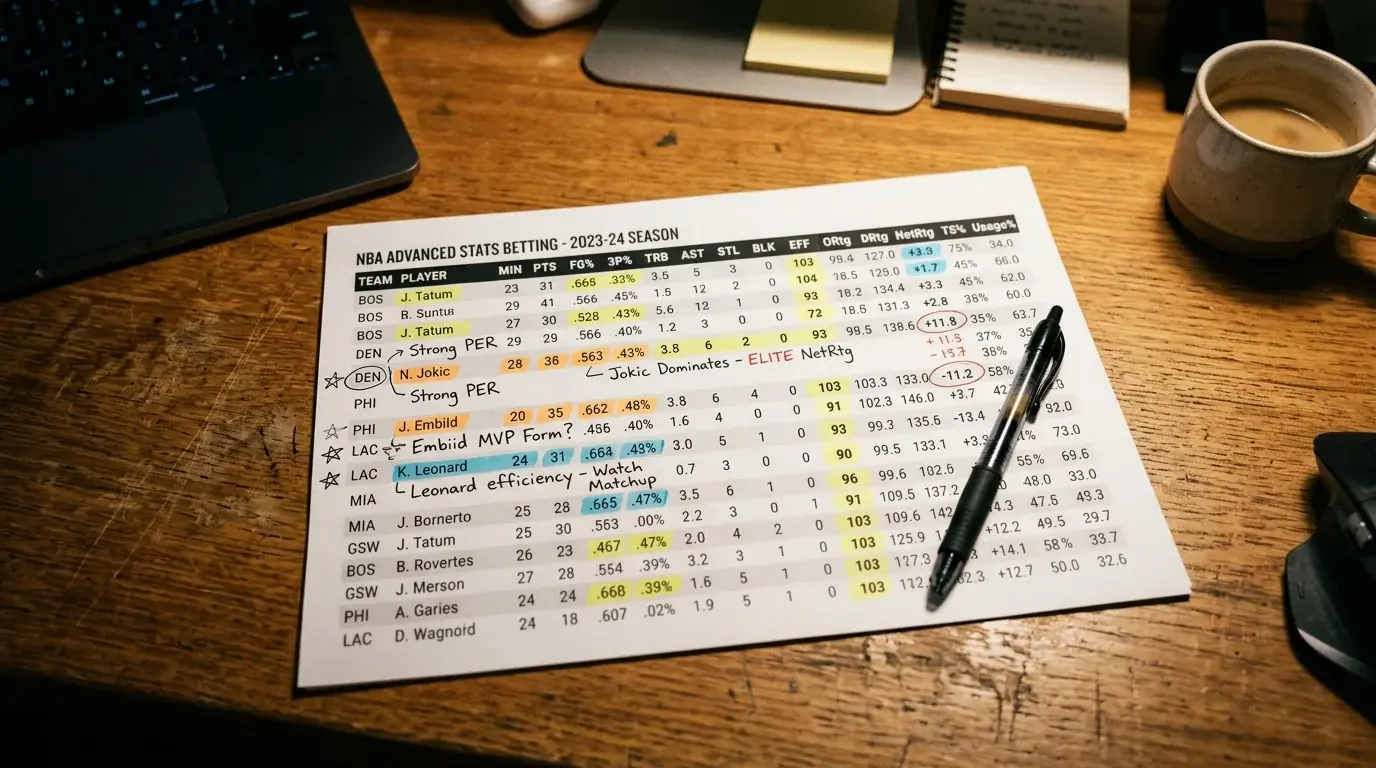
A practical technique I use: I record every bet in a spreadsheet with a column for “emotional state.” Was I calm, frustrated, excited, bored? Over a season, the pattern is unmistakable. Bets placed when I was bored or frustrated had a win rate 8 percentage points lower than bets placed in a calm, analytical state. That single data point changed how I approach game nights. If I feel the wrong emotion creeping in, I close the app. The games will be there tomorrow.
If you are new to all of this, I would strongly suggest starting with the beginner’s guide to NBA betting before building your staking plan — the fundamentals there provide the context that makes bankroll management intuitive rather than abstract.
See also: nba betting ods for smart NBA staking advice.
The Staking Plan That Survives a Full Season
A bankroll management system does not need to be complex. It needs to be followed. Define your bankroll, set your unit at 1-2%, pick flat or percentage staking, recalibrate monthly, and track everything. The punters who last in NBA betting are not the ones with the best picks — they are the ones who are still solvent in April when the variance-riddled regular season gives way to the more predictable playoff matchups. Your staking plan is what keeps you at the table long enough to get there.
What percentage of my bankroll should I stake per NBA bet?
Between 1% and 3% is the standard range. Beginners should start at 1%, which provides 100 units of runway and can absorb significant losing streaks without exhausting the bankroll. Only move toward 2-3% once you have tracked your results over several months and confirmed a consistent edge.
Should I increase my unit size after a winning streak?
Not mid-streak. Recalculate your unit at predetermined intervals — monthly or at season breakpoints like the All-Star break. If your bankroll has grown, your unit naturally adjusts upward at that point. Increasing your unit during a hot streak introduces emotion into what should be a mechanical process, and it amplifies the damage when the streak inevitably ends.
Published by the nba Betting ods team.