NBA Home Court Advantage: What the Statistics Say for Betting
 Available in US

The night the Orlando Magic hosted the Memphis Grizzlies at the O2 Arena in London, over 18,000 fans packed the venue in what became the most-watched NBA Global Game in UK history. The atmosphere was electric — but neither team was playing at home. That neutral-site spectacle highlights something most punters take for granted: home court advantage is real in the NBA, but its magnitude is smaller and more nuanced than many bettors assume.
Factor in schedule fatigue with NBA back-to-back games betting insights.
Historical Home Win Rates in the NBA
For most of NBA history, home teams have won between 57% and 60% of regular-season games. That is a meaningful edge — but it is the smallest home advantage among major North American professional sports. Basketball, alongside NCAA and NBA combined, accounts for roughly 35% of all US sports betting handle, and the home court factor is baked into every spread and moneyline the bookmaker publishes.
The trend line, however, is not flat. Home win rates dropped sharply during the bubble seasons of 2020 and 2021, when games were played in empty arenas. They recovered somewhat in subsequent seasons but have not returned to the pre-2020 peak. The current rate hovers around 56-57%, suggesting that the advantage is real but has compressed slightly over the past five years. Travel improvements, load management and improved player nutrition on the road have all contributed to narrowing the gap.
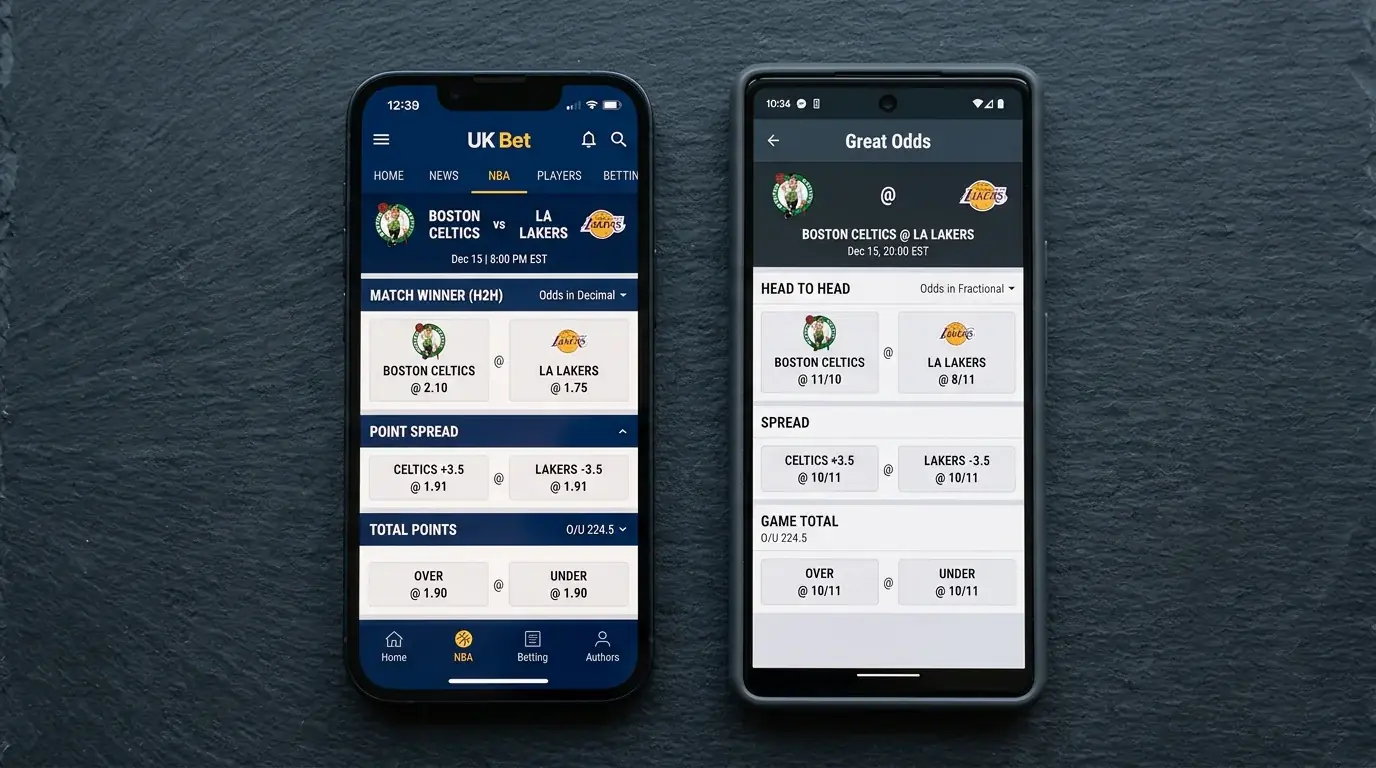
For bettors, the key point is this: bookmakers still price home court advantage into their lines, typically worth 2 to 3 points on the spread. If the true advantage has compressed to something closer to 1.5 to 2 points, there may be systematic value on road teams — especially in spots where the perceived home edge is inflated by reputation rather than supported by recent data.
How Bookmakers Price Home Court Into NBA Odds
I once ran a simple test: I took the power ratings for every NBA team at the midpoint of a season, calculated what the spread should be based purely on the difference in ratings, and compared it to the actual line. The difference, on average, was 2.3 points in favour of the home team. That is the bookmaker’s home court adjustment in action.
But the adjustment is not uniform. Big-market teams with raucous arenas and strong home records — think the Warriors at Chase Center or the Knicks at Madison Square Garden — often see a slightly larger home premium built into their lines, sometimes closer to 3 points. Small-market teams with quieter arenas and mediocre home records get a smaller adjustment, closer to 1.5 points.
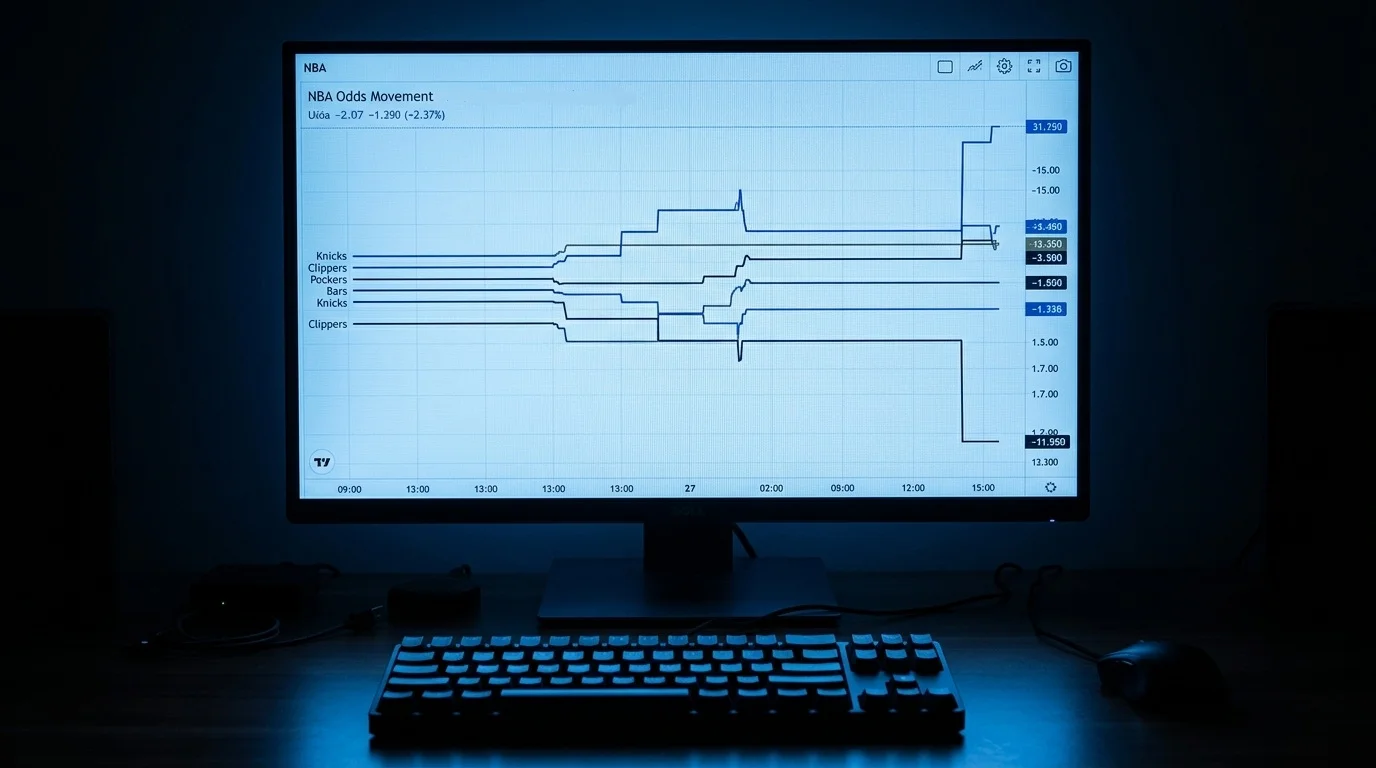
The question for bettors is whether this variable pricing accurately reflects reality or introduces distortions. My experience suggests the latter: marquee arenas carry a reputational premium that sometimes exceeds their actual statistical home edge in a given season. When a team’s home record is worse than its road record through the first 30 games — it happens more often than you would expect — the bookmaker is slow to remove the home premium from their line. That lag is an opportunity.
Altitude, Travel and Venue-Specific Factors
Denver is the obvious outlier. The Nuggets play at 1,609 metres above sea level, and visiting teams consistently underperform there compared to their road averages elsewhere. The altitude effect is physiological: lower oxygen levels reduce aerobic capacity, and teams that fly into Denver the night before a game rarely acclimatise. The Nuggets’ home record has historically been among the league’s best, and the spread adjustment for games at Ball Arena reflects this — typically an extra point beyond the standard home premium.
Altitude aside, travel distance matters less than travel pattern. A team flying from New York to Boston (a 90-minute hop) faces minimal disruption. A team flying from Portland to Miami (a cross-country, three-timezone journey) faces genuine fatigue. The bookmaker’s home court adjustment does not typically distinguish between these scenarios explicitly, but the smart bettor should. A home team hosting a visitor that flew cross-country overnight has a larger effective advantage than the standard 2-point adjustment implies.
Arena-specific factors beyond altitude include noise levels (some venues are measurably louder than others, affecting communication on the court), court dimensions (all NBA courts are identical, unlike some European leagues), and even lighting and sight lines that visiting shooters find unfamiliar. These micro-factors are nearly impossible to quantify individually, but collectively they contribute to the statistical home edge.
When to Bet Against the Home Team
Betting against the home team feels counterintuitive, but some of the most consistent value I have found in NBA comes from precisely this approach — in the right spots.
The first spot is home teams on the second night of a back-to-back. The assumed home advantage is partially neutralised by fatigue, but the line often does not fully account for this because the home label keeps the spread wider than it should be. A tired home team hosting a rested road team is one of the most reliably overpriced situations in the NBA regular season.
The second spot is home teams with poor recent home form. If a team has lost five of its last seven at home, the bookmaker’s line still reflects the generic home premium. The market adjusts slowly to form within specific venues, creating a window where the road team offers value.
The third spot is late-season games where the home team has nothing to play for. A team locked into its playoff seed with three games remaining will rest starters, reduce effort and treat the game as a preseason exhibition. The visiting team, fighting for a play-in spot, brings genuine intensity. Home court advantage evaporates when the home side does not care about the result.
For a deeper look at how the spread reflects home court and other situational factors, my guide to NBA point spreads breaks down the mechanics of how bookmakers build their lines.
Visit nba betting ods for situational NBA analysis.
The Shrinking Edge That Still Matters
Home court advantage in the NBA is real, but it is not a blanket rule you can apply without thought. It varies by team, by venue, by schedule context and by time of season. The punters who profit from it are not the ones who always back the home team or always fade them — they are the ones who know when the bookmaker’s adjustment is too large, too small, or exactly right. That discrimination, built on data rather than instinct, is where the edge lives.
Has NBA home court advantage changed in recent seasons?
Yes. Home win rates have compressed from roughly 60% in the pre-2020 era to around 56-57% in recent seasons. Factors including improved player travel conditions, load management of starters during away stretches, and the lasting impact of the 2020-21 bubble seasons have contributed to a smaller but still measurable home edge.
Which NBA arenas have the strongest home court edge?
Denver’s Ball Arena consistently shows the largest home advantage due to its high altitude, which affects visiting teams’ conditioning. Beyond Denver, arenas in Salt Lake City, Miami and Golden State have historically posted strong home records. The advantage fluctuates season to season based on roster quality and coaching, so historical reputation does not always match current-year data.
Written by the editors at nba Betting ods.