NBA Draft Betting: First Pick Odds and Draft Night Markets
 Available in US
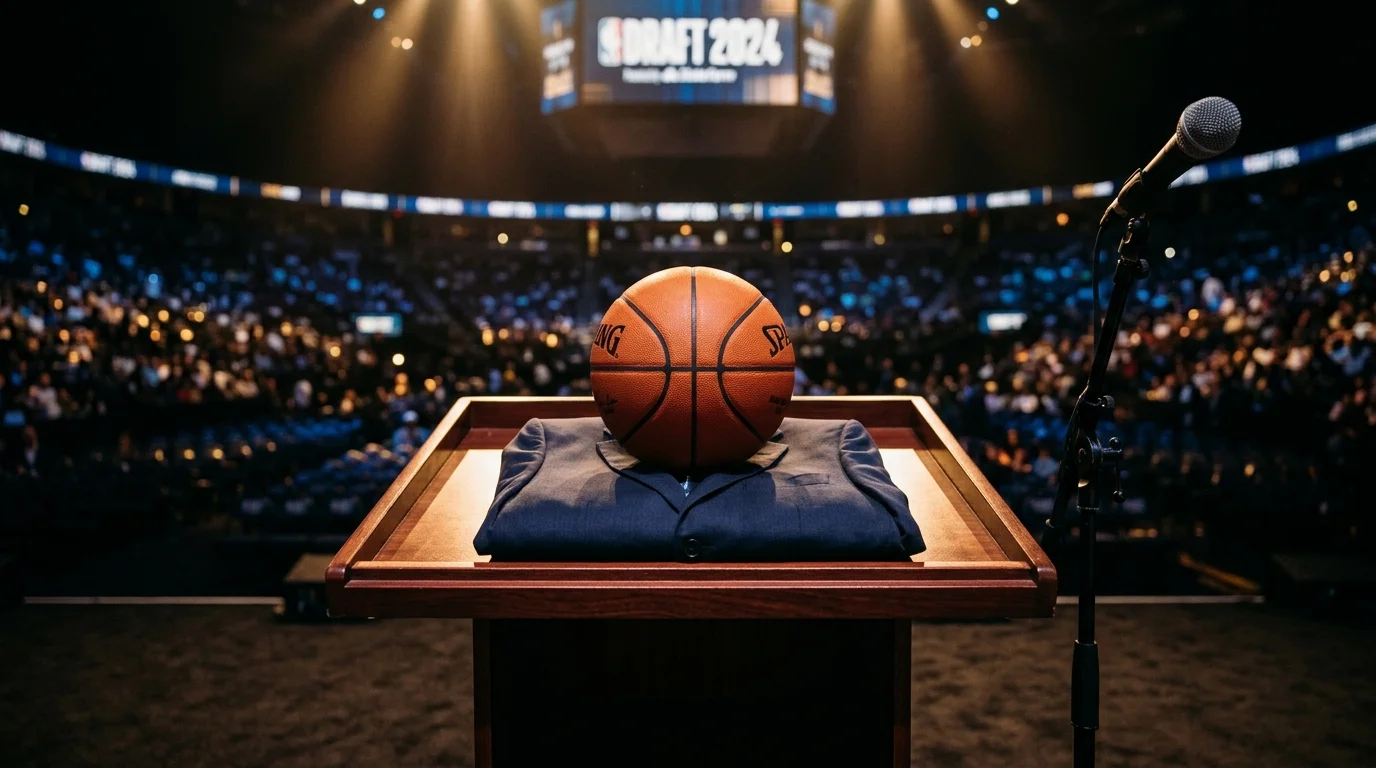
Draft night is the one evening each year when NBA betting has nothing to do with basketball being played on the court. No jump shots, no defensive rotations, no fourth-quarter comebacks. Instead, you are betting on decisions — the choices made by general managers, influenced by months of private workouts, medical evaluations and backroom negotiations that the public never sees. The basketball betting market is valued at 8.7 billion dollars globally and is projected to nearly double by 2033, and draft-night wagering is one of its fastest-growing niche segments because it attracts both hardcore basketball analysts and casual fans drawn in by the spectacle of young careers being launched live on television.
Follow up draft picks with NBA futures odds for next season.
NBA Draft Betting Markets in the UK
UK bookmakers have embraced the Draft in the past few years, expanding from a single “first overall pick” market to a menu that rivals a regular game night. 68% of UK gamblers surveyed in early 2026 said they planned to increase their betting activity this year, and the Draft’s growing media profile in the UK is part of what draws new punters into basketball wagering for the first time.
The core markets include first overall pick (which player will be selected first), top-three pick (will a specified player be selected in the first three picks), over/under draft position (will a player be selected higher or lower than a specified pick number), and first player drafted by position (first point guard selected, first centre selected, and so on).
Some operators also offer more creative markets: total trades on draft night, which conference the first pick will come from, and whether a specified player will be drafted in the first or second round. These secondary markets tend to carry wider margins because of lower volume and less efficient pricing, but they occasionally offer value when the bookmaker’s assumptions about trade activity or positional runs are off.
First Overall Pick: How Odds Form and Shift
The first overall pick market opens months before the draft — sometimes as early as the NCAA tournament in March — and the odds shift dramatically as the pre-draft process unfolds. A player who dominates the combine, impresses in private workouts and generates buzz from team executives can see their first-pick odds halve in a matter of weeks. Conversely, a poor medical evaluation or a disappointing workout can crater a prospect’s odds overnight.
The market is driven almost entirely by information asymmetry. The team holding the first pick knows who they want long before the public does. The prospect’s agent knows. A handful of connected reporters know. Everyone else is guessing based on public signals: mock drafts, anonymous front-office quotes, workout reports, and social media activity. The odds you see at your bookmaker reflect the public’s best guess, which is often right but occasionally spectacularly wrong.
Where value exists is in the gap between what the public believes and what the reporting suggests. If the consensus mock drafts unanimously project Player A as the first pick and the bookmaker prices them accordingly at 1/5, but a credible beat reporter tweets that the team with the first pick is “seriously considering” Player B, the market is slow to adjust. The gap between tweet and odds movement can be hours, and in that window, Player B’s odds at 5/1 or 6/1 might represent genuine value. Speed matters in this market more than in almost any other NBA bet.
Over/Under Draft Position Markets
This is where the Draft becomes genuinely interesting from an analytical perspective. Instead of predicting who goes first, you are predicting where a specific player will land — higher or lower than a line set by the bookmaker.
A typical line might read “Player X: over/under 7.5.” If you believe Player X will be drafted 7th or higher (1st through 7th), you bet the under. If you think he falls to 8th or later, you bet the over. The pricing is usually close to even money on both sides, similar to a game total, which makes these bets relatively bettor-friendly in terms of margin.
My approach to draft position bets is built on positional runs and team needs. The draft is not purely a ranking of talent — it is a matching exercise. A team at pick 6 that desperately needs a point guard will take the best available guard even if a “better” forward is on the board. If I can identify likely positional runs — a stretch of picks where multiple teams need the same position — I can predict where the demand will push certain players higher than pure talent rankings suggest and where other players will fall because no team in that range needs their skillset.
Pre-draft workout schedules also provide signal. When a team with a high pick brings in a specific player for a private workout, it signals genuine interest. When they decline to work out a player that mock drafts have linked to their pick, it suggests they are looking elsewhere. These workout reports are public and widely available in the weeks before the draft. Tracking them systematically gives you a better map of team intentions than any mock draft.
Where to Find an Edge Before Draft Night
The NBA’s own legal department has warned that every effort must be made to ensure personnel are aware of the risks gambling poses to their careers — a reminder that the league takes information security around draft decisions seriously. That institutional caution actually works in the bettor’s favour: it means the flow of inside information is restricted, which keeps the market inefficient for longer.
The edge in draft betting comes from consuming more information, more carefully, than the average punter. Mock drafts from credible analysts (not aggregated consensus mocks, which smooth out the interesting disagreements) provide the baseline. Team beat reporters provide the intelligence. Combine measurements provide the physical data. And college game film — available freely online — provides the performance context that connects the measurements to the mock positions.
I treat draft night betting the way I treat futures: small stakes, high selectivity, and a clear thesis for every bet. The information advantage in draft markets is unusual for sports betting because it rewards basketball knowledge and media literacy more than statistical modelling. If you follow the pre-draft process closely and can synthesise workout reports, beat reporter intelligence and team needs into a coherent picture, the draft offers a handful of genuinely mispriced bets each year. If you are betting based on name recognition alone, save your money for the regular season. For a broader look at longer-range NBA wagers, my guide to NBA futures odds covers championship and MVP outrights.
See also: nba betting ods for NBA off-season markets.
One Night, One Chance to Read the Room
The Draft is a one-night event with no second chances. Once the picks are made, the market closes. There is no Game 2 to adjust your position, no mid-series hedge, no live cashout as the event unfolds. That finality makes it uniquely exciting to bet on and uniquely punishing if you get it wrong. My rule is to place no more than three draft bets per year, each with a specific thesis I can articulate in one sentence. If I cannot explain why I am betting in one sentence, I do not bet.
When are NBA Draft betting odds released at UK bookmakers?
First overall pick odds typically appear several weeks before the draft, often around the time of the NBA Draft Lottery in May. Over/under draft position markets and other secondary markets usually appear 1 to 2 weeks before draft night. Odds are updated frequently as workout reports, mock drafts and insider reporting shift expectations.
Can I bet on which round an NBA prospect will be drafted?
Some UK bookmakers offer first-round vs second-round markets for selected prospects, particularly those projected near the end of the first round where the outcome is uncertain. Availability varies by operator and by the depth of their NBA coverage. Check multiple bookmakers if you are looking for a specific round market.
Prepared by the nba Betting ods editorial staff.